
Australia’s Interactive Gambling Act restricts operators, while offshore licensing, payment methods and security claims require careful scrutiny.
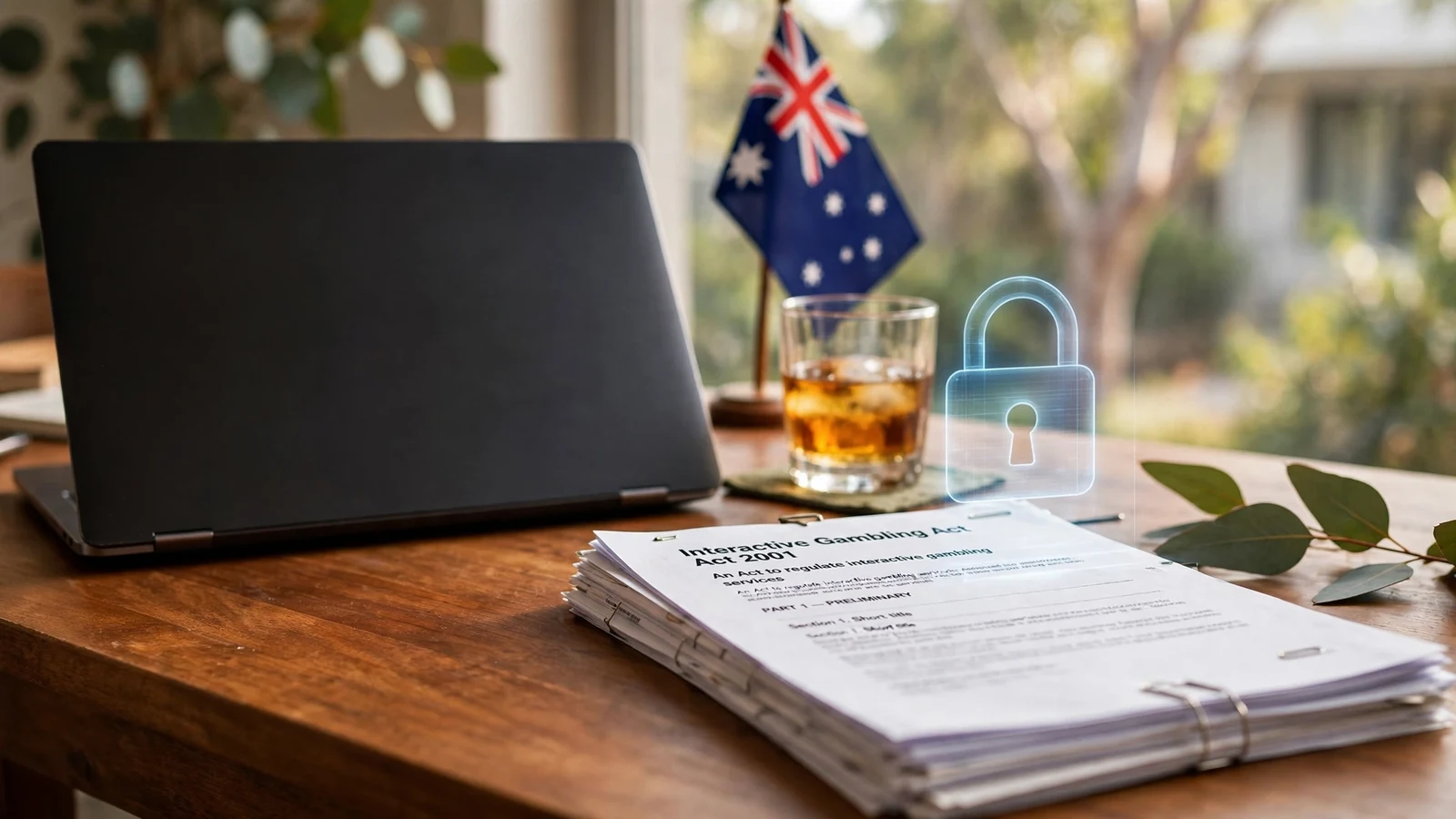
The starting point for understanding online casino access in Australia is the Interactive Gambling Act 2001. It prohibits operators from providing online casino games to Australian residents. That includes familiar formats such as slots and table games: the law concerns the service being offered to people in Australia, not simply the location of a website or the country named on an operator’s licence.
This distinction matters when you are trying to understand what “safe” means in a search for an online casino in Australia. A site may be designed for Australian visitors or accept Australian customers, but those features do not change the legal position of the service. Nor does an offshore licence make an operator licensed in Australia. A label or claim about regulation should not be confused with permission to offer online casino games to people here.
The law is directed at operators providing the prohibited service. It does not explicitly make an individual player’s use of an offshore casino site a criminal offence. That is a limited statement about player liability, not a declaration that offshore gambling is approved, protected or safe. It should not be read as a recommendation to sign up or as assurance that a player will have an effective remedy if a dispute arises.
In other words, the legal position for operators and the position of individual players are not identical. The Act prohibits the provision of online casino games to Australian residents, while it does not explicitly criminalise the individual for using an offshore site. Neither point turns an offshore service into a lawful Australian casino. If you see a site describing itself as a safe casino for Australians, the wording alone cannot resolve whether its offer is permitted or what protections would apply to you.
ACMA, the Australian Communications and Media Authority, is the primary regulator of online gambling in Australia. Its role provides the regulatory context for the rules, but the basic distinction remains: the law addresses operators offering prohibited online casino services to people in Australia, while it does not explicitly criminalise individual players for using offshore sites. These statements should be kept separate rather than collapsed into a simple claim that online casino access is either wholly legal or wholly illegal for every person involved.
The phrase “safe online casino” can therefore conceal different questions. A site’s technical presentation, an offshore licence, or its willingness to accept Australian visitors does not alter the prohibition on operators providing casino games to Australian residents. Equally, the fact that the Act does not explicitly criminalise an individual player does not establish that the site is authorised in Australia. A person deciding what to do should not treat the absence of an explicit player offence as a safety guarantee.
For Australian readers, the key legal starting point is narrow but important: domestic operators are prohibited from offering online casino games to residents, and offshore operators are not made Australian-authorised simply by serving Australian customers. The Act does not explicitly criminalise individuals who use offshore casino sites. Those points describe the legal framework; they do not endorse any casino or assure you that a particular service is safe to use.
ACMA is responsible for enforcing Australia’s online gambling rules. Its response to a prohibited service can include action against the operator, as well as measures intended to prevent people in Australia from reaching the website. Blocking is one tool in that enforcement work; it is not a certificate that other sites are safe.
When a service appears to breach the Interactive Gambling Act 2001, ACMA may ask internet service providers to block access to it. This can apply to websites offering prohibited interactive gambling to Australian customers, as well as services aimed at adults in Australia that do not hold the required authorisation. The request is directed to providers, which then implement the block for their customers.
A block is an access measure, not a finding that every page or claim on a site has been independently examined. Nor does the absence of a block establish that a gambling service is lawful or safe. ACMA’s enforcement tools also include fines for operators that breach the Act. The steps taken can therefore differ according to the service and the circumstances; a website block is not the only possible response.
ACMA Enforcement
Since November 2019, ACMA has blocked approximately 1,011 illegal gambling and affiliate websites.
ACMA treats blocking orders as a last resort when it considers customer safety to be at risk. That qualification matters: blocking is not simply a routine rating system for safe online casino sites, and it does not provide an endorsement of alternatives. It is a regulatory measure aimed at limiting access to services that fall within the relevant prohibited or unlicensed categories.
The scale of the action gives some context. From its first blocking request in November 2019 onward, ACMA has blocked about 1,011 illegal gambling and affiliate websites. The figure covers both gambling services and affiliate sites, rather than only casino operators. It reflects enforcement activity over time, not a count of sites that a player should treat as a complete directory of unsafe services.
For you, a block may be visible as an inability to open a website through your provider. That experience does not turn the measure into an individual security assessment: it tells you that access has been targeted under ACMA’s process, not that every unblocked service has passed a safety check. Likewise, searches for safe Australian casinos or reviews describing a site as secure do not replace regulatory action or establish Australian authorisation.
It is useful to keep the purpose of blocking clear. ACMA uses it to respond to prohibited or unlicensed gambling services and, where customer safety is considered at risk, may use an order as a last resort. It is not a guarantee about the conduct of every operator, nor a recommendation to move to another site. The regulator’s role is enforcement; a block is one way that enforcement can affect access to illegal gambling services in Australia.
 Australian real-money online casino guide: laws and checksLearn how Australian rules treat real-money casino sites, what to verify on offshore licences and payment terms, and ACMA’s role in restricting…
 New online casino sites in Australia: what to checkLearn how offshore licensing differs from Australian rules, and what to check in site terms, bonuses, payments and withdrawals before depositing.
PayID is a payment route, not a safety check. A transfer arriving quickly cannot show whether a gambling service is trustworthy, properly authorised or able to return money. For Australians, that distinction matters: a payment option aimed at local customers does not make an online casino lawful to operate here. Treat any discussion of PayID as information about how a transfer may work, not as a recommendation to deposit.
A specialist payment review describes PayID transfers as generally using the New Payments Platform, with funds sometimes clearing within minutes after the transfer is released. That timing is not assured. The payment may still be waiting for approval or processing, and the timing described by a review may not reflect every bank, transaction or service. Check the payment instructions shown to you before proceeding, including whether the transfer has been approved and what the service says to do if it is delayed. Do not send another payment simply because the first one has not appeared; first establish its status through the relevant payment channel.
There is also a difference between the transfer clearing and a deposit appearing in an account. A bank may have released the payment while the receiving service has not yet updated its balance. Conversely, an on-screen confirmation does not by itself confirm that the funds have reached the intended recipient. Keep the transaction record and compare the recipient details with the instructions you were given. If details do not match, pause rather than guessing or changing them.
Timing depends on the route and the point at which a payment is approved. Specialist gambling-payment reviews describe PayID and some e-wallets as potentially quick once approved, while bank transfers and card payments may take several business days. This is a broad comparison, not a service guarantee or a fixed timetable. A delay can arise before approval as well as during processing, so look for clear terms that distinguish those stages. If the stated process is unclear, do not rely on a general claim that a method is “instant”.
Most importantly, a deposit method does not tell you how withdrawals work. PayID being available for money going in does not establish that it can be used to get money out. A specialist payment review characterises POLi mainly as a deposit method; you should not assume it is available for withdrawals. Before making any payment, check the stated withdrawal routes separately and whether the service explains how a balance can be returned. If those details are absent or contradictory, that uncertainty is a reason to stop, not to deposit in order to find out.
When comparing payment instructions, check that the method is clearly named, the steps are consistent, and the stated processing stages are understandable. Be cautious if you are asked to use a different route from the one displayed, or if the recipient details change without a clear explanation. Keep records of what you were shown and what you sent. These are practical checks on the payment process; they cannot confirm that a site is safe or that a payment will be recoverable.
 Top-Rated Online Casinos in Australia: What to CheckLearn how to judge casino ratings, review account checks, support and payment conditions, and understand bonus wagering and payout delays.
 Novomatic Casinos in Australia: Games and ChecksLearn how to check a casino’s Novomatic game lobby, bonus terms, licensing and payment details, and what to verify before real-money play.
Searches for a safe PayID casino often focus on speed and convenience, but neither answers the important question of what happens if a payment is delayed or disputed. PayID is not an endorsement, and a fast transfer does not provide consumer protection. Australian law prohibits operators from offering online casino games to people in Australia. Do not treat a local payment option, a welcome offer or a no-deposit bonus claim as evidence that an online casino is authorised. A bonus is not a substitute for clear payment terms or reliable recourse.
If you have already initiated a transfer and something seems wrong, avoid sending more money to resolve the issue. Check the transaction status with your bank or payment provider and retain the instructions and confirmation records. The method may affect how quickly a transfer is processed, but it does not remove the need to understand the route, distinguish deposits from withdrawals and consider the risks before paying.
A withdrawal request can trigger identity checks even if an account was opened earlier. Casinos commonly require KYC verification before releasing funds, so a request may not move directly from submission to payment. This is an account-checking process, not evidence that an online casino is safe or authorised to serve people in Australia.
Be prepared for a request to confirm who you are, where you live and that you own the payment method used. The documents commonly requested include photo identification, proof of address and proof of ownership of the payment method. The exact documents and submission steps can differ between services.
Check that the details on your account and documents are consistent before sending anything. If a payment method belongs to someone else, or the account information does not match your identification, the review may become more complicated. Do not send documents through an unverified link or an unexpected message. Use the account’s established verification process and take care with personal information.
It is also sensible to understand the requested documents before you submit a withdrawal. Read the service’s stated requirements and keep a record of what you provided and when. If the request is unclear, ask for an explanation through the service’s official support channel rather than sending extra information indiscriminately.
Verification and payment processing are separate stages. Approval of your identity does not mean every withdrawal method will work in the same way or arrive at the same time. A specialist review describes PayID and some e-wallet withdrawals as potentially quick after approval, while bank transfers and cards may take several business days. Treat that as reported guidance, not a timetable that applies to every operator or transaction.
Cards need particular care: a card withdrawal may be slower or unavailable, depending on the processor. A service may therefore offer a different route for money out than the one used to pay in. Before submitting a request, check which methods are supported for withdrawals, whether the account must be verified first and whether the payment route has any stated processing conditions.
For PayID or an e-wallet, the transfer itself may be quick once the request is approved, but that does not remove the time needed for identity checks or the service’s own processing. A bank transfer or card payment may involve additional processing by the relevant provider. If a service gives a broad estimate, ask whether it refers to the verification stage, the operator’s processing, or the time for the payment to reach your account.
First check the account for a verification request, a rejected document or a message asking for clarification. Then compare the withdrawal method with the service’s stated conditions. If the payment route is unavailable or the request remains unclear, contact support in writing and keep the response and transaction details. Avoid sending repeated requests through different channels without understanding whether that could create confusion.
Do not rely on a review or promotional claim as a guarantee of a particular payout time. Processing can depend on the withdrawal method, the payment processor and whether verification has been completed. A delay does not by itself explain what has happened, so ask for a specific status and the next step required.
These practical checks can help you understand what a withdrawal process involves, but they do not make real-money online casino play safe for Australian residents. An identity check is a procedure used by a service; it is not proof of Australian authorisation or a promise that winnings will be paid.
Security language can sound reassuring without showing how a site handles your information. Treat claims such as “safe”, “secure” or “trusted” as prompts to check the connection and the site’s practices, not as proof that either is reliable.
Technical Security Check
Check the URL
Verify that the address begins with HTTPS and does not have misspellings.
Inspect the Certificate
Open the connection details in the browser to ensure the certificate applies to the domain.
Monitor Redirects
Ensure the page does not redirect unexpectedly to a different domain when requesting sensitive details.
Casinos use SSL encryption to safeguard transactions and sensitive information. When you visit a page that asks for personal or payment details, check that the address begins with HTTPS and that your browser does not display a certificate or security warning. You can open the connection details in the browser to see whether the certificate applies to the domain you are visiting. If the address is misspelled, redirects unexpectedly, or the browser warns that the connection is not private, do not enter information there.
Encryption helps protect information as it travels between your device and the site. It does not establish who operates the site, guarantee that information is stored securely, or ensure that a payment or account issue will be resolved. A valid encrypted connection is one technical check, not an overall safety rating. This distinction matters when a site presents a secure padlock as if it settles every question.
Look at where sensitive details are requested. A page collecting identity or payment information should be part of the same expected site, with no unexplained redirect to a different domain. Read the address carefully before submitting a form; a familiar logo or page design does not prove that the address is genuine. If the page changes domains without a clear explanation, pause rather than assuming the transition is safe.
A polished layout, customer comments, security badges and confident promises are not substitutes for checking the connection. Images of certificates or seals may be displayed without demonstrating that they apply to the site in front of you. Nor does the word “encrypted” explain what data is collected or how it is handled after submission. Be cautious when a site makes broad security claims but offers little clear information about its privacy practices or how to contact it about data concerns.
Avoid entering details through a link in an unexpected message. Instead, check the address independently and confirm that it matches the service you intended to visit. Do not ignore a browser warning just because a page looks familiar, and do not assume that a secure connection makes it sensible to share information the site does not appear to need.
If you have already entered sensitive information on a page that showed a warning or seemed misleading, contact your bank or payment provider promptly if payment details were involved. Change any password you reused elsewhere, and use the relevant account or identity provider’s own support channels to ask what steps are available. A careful technical check cannot remove every risk, but it can help you avoid sending information through a connection your browser has flagged as unsafe.
Responsible-gambling tools can help you set boundaries, but they cannot remove the risks of gambling or ensure that a service is safe. A deposit limit is a way to control how much you make available to an account; it is not a promise that you will avoid losses or harm. Treat any tool as one part of a wider decision about whether gambling is affecting your finances or wellbeing.
Attention: Responsible-gambling tools like deposit limits are not guarantees against losses or harm and do not make a risky service safe.
The Interactive Gambling Act requires licensed operators to meet responsible-gambling rules. A specialist review describes deposit limits that players can set for daily, weekly or monthly periods. That is a report about the feature, not evidence that every service offers it or that it is available to Australian players. If a site presents limits as a safeguard, check its terms to understand how the setting works and whether it can be changed. Do not assume a limit will prevent further deposits through another account or service.
Support information matters as well. Reputable platforms provide material about gambling-related harm and point users towards professional support services in Australia. Look for clear, accessible information rather than relying on promotional claims that a site is “safe” or that its tools make play risk-free. If gambling is causing distress, affecting relationships or putting pressure on essential spending, seeking professional help is more important than adjusting an account setting.
A practical check is whether the information is easy to find before you need it: responsible-gambling guidance, details of available limits and routes to support should not be obscured by marketing. If you cannot locate these details, or cannot understand what a control does, do not treat the presence of a button or badge as meaningful protection.
For Australian readers, the existence of responsible-gambling features does not itself establish that an online casino is authorised to serve people in Australia. Nor does it guarantee that the operator will resolve a problem fairly. Limits and support can be useful safeguards, but they are not substitutes for careful judgement, and they cannot turn a risky service into a safe one.
A pokie’s return to player, or RTP, is game information—not a promise about what you will receive. It describes a theoretical return across play over time. It cannot predict the outcome of an individual session, and a displayed RTP does not make a game safe or remove the possibility of losing money.
To find the figure, open the game’s information or help screen. It is commonly accessed through an “i” icon or a menu. Check the details for the specific version being offered, rather than relying on a general description of the game. If the information screen does not show an RTP, you cannot confirm the figure from that screen alone.
One detail can be easy to miss: a provider may release the same game in several RTP versions. The operator selects which version to run, so two games with the same title may not have identical RTP settings. The title or appearance alone is not enough to tell you which version is in use. Look for the RTP in the game’s own information and make sure it refers to the version actually available.
This is useful for understanding how a game describes its odds, but it is not a way to identify a “safe” casino game. RTP does not certify an operator, guarantee a result or show how a site handles your account. A generous-sounding figure should not be treated as proof that a game or service is trustworthy.
The distinction matters in Australia: online slots and casino games such as blackjack are illegal when offered to people in the country. Game information does not change that position. A free-play version may let you see how a game works, but it does not establish that the service offering it is authorised for Australian players.
Open the game's information or help screen, typically accessed via an "i" icon or a menu, to find the theoretical return for that specific version of the game.
If you encounter game details, treat them as information about the game’s stated return, not as a recommendation to play. In particular, do not assume that familiar graphics, a known title or an RTP shown in a promotional description tells you which version is running. The game’s information or help screen is the relevant place to check the displayed RTP, while the figure itself remains a theoretical measure rather than a forecast for you.
A phone changes how you reach an account, not whether the service is lawful or safe. In Australia, online casino games are prohibited services when offered to people in the country. An app, mobile-friendly website or quick sign-in does not change that. Do not treat easy access as evidence that a service is authorised or that your money and personal details are protected.
If you encounter a casino login page, pause before entering anything. Check that the address is the one you intended to visit and that the connection is protected by SSL encryption. Casinos use SSL to safeguard transactions and sensitive information, but encryption only concerns the connection between your device and the site. It does not establish that the operator is trustworthy, properly authorised or able to resolve a dispute.
This distinction matters on a phone, where a small screen can make it harder to notice a changed web address or read account terms. Avoid following unfamiliar links to a sign-in page, and do not save payment or identity details on a device you share with others. If a page asks for sensitive information, consider whether you know who will receive it and why it is being requested. A polished design or a familiar-looking login screen is not proof of safety.
Identity information can remain at risk even after you stop using an account. Casinos conduct KYC checks and require identity verification before withdrawals; this can involve documents such as photo identification, proof of address and evidence that you own the payment method. Sending those documents from a mobile device does not make the request safer. Be cautious about uploading them through a link or message unless you have independently confirmed that it belongs to the service.
Keep your device access private, and do not leave an account open where another person could use it. If you have entered payment or identity details into a page you cannot verify, avoid sending more information and contact your payment provider about protecting your account. These precautions reduce some risks to your information; they cannot guarantee that an online casino is safe.
A safe mobile casino is not simply one that loads reliably or remembers your login. For Australians, mobile access does not remove the legal restrictions on online casino games, and technical safeguards do not supply the consumer protections that an unlicensed service lacks. If you are unsure about a site, do not use your phone’s convenience as a reason to proceed.
Choosing an online casino means weighing the information available about its licensing and practical details. Use these notes as a starting point, and check whether each operator’s terms and protections suit you.
JustCasino
JustCasino is listed with a Curacao Gaming Control Board licence. The available information does not specify other operator details.
SpinsUp
SpinsUp is listed under Curacao Gaming Control Board licence OGL/2023/174/0082, held by Dama N.V.
Vegaz Casino
Vegaz Casino is listed under Curacao licence OGL/2024/1335/0780. Its minimum deposit is EUR 20.
Wild Tokyo
Wild Tokyo lists a Curacao licence and a minimum deposit of A$10. Its stated payout times are 30–60 minutes for crypto and 1–5 days for fiat.
Rollero Casino
Rollero Casino is listed under Curacao Gaming Control Board licence OGL/2023/176/0095, held by Hollycorn N.V.
Uptown Pokies
Uptown Pokies is listed as operating under a Curacao licence since 2017. Its minimum deposit is A$20.
House of Pokies
House of Pokies lists an international iGaming licence, though the jurisdiction is not named in the available information. PayID payouts are stated as taking 1–24 hours, and the minimum deposit is A$30, or A$10 with PayID.
SkyCrown
SkyCrown lists a Tobique Gaming Commission licence and a minimum deposit of A$30. Its stated payout times are around 10–15 minutes for crypto and 1–5 days for fiat.
GoldenCrown
GoldenCrown is listed under Curacao Gaming Control Board licence OGL/2023/176/0095, held by Hollycorn N.V.
JeetCity Casino
JeetCity Casino is listed under a Curacao eGaming licence held by Dama N.V.
“Safe” can mean different things: whether a service is authorised to offer a product in Australia, whether it protects your information, and whether you have a route to help if something goes wrong. A polished website or reassuring safety claim does not answer all of these questions.
For online casino games, the legal position matters first. The Interactive Gambling Act 2001 prohibits operators from offering real-money casino games to people in Australia. An offshore licence does not change that: it is not Australian authorisation, and should not be presented as proof that a casino is licensed in Australia. A list describing offshore sites as safe casinos in Australia could therefore give a misleading impression.
ACMA directs players to its website and the national register for information about legal gambling products. Australians are encouraged to use ACMA’s public register to check whether a wagering service holds a valid Australian licence. A listing or licence for a wagering service should not be taken as approval for online casino games. Check what product the authorisation covers, rather than relying on a site’s name, branding or claims.
Legal Risks
Using a VPN to access a casino may lead to voided winnings, account closure, or loss of your deposit.
If an unlicensed service withholds winnings or handles a complaint poorly, you may not have the consumer protections available through an authorised Australian service. Australian laws may not assist you in recovering money from an offshore operator. Treat promises of easy dispute resolution with care, and do not assume that a licence issued elsewhere gives you a local remedy.
Using a VPN to access a casino can also create practical risks: the operator may void winnings, close your account or keep your deposit. A VPN does not make a prohibited service authorised in Australia.
So, is an online casino safe for Australian players? There is no sound basis for treating an offshore casino as safe simply because it has an offshore licence or appears professional. For legal gambling products, use ACMA’s information and verify the relevant Australian authorisation on its register. If a service cannot be checked there, do not mistake its claims for consumer protection.
A site can look Australian without being authorised to offer casino games here. An Australian-style name, prices shown in Australian dollars, or an app that works on your phone does not establish that a service holds an Australian licence. The same applies to claims in a forum or promotional material: treat them as claims to verify, not proof.
ACMA is Australia’s primary online gambling regulator. Its public register lets you check whether a wagering service holds a valid Australian licence. Use the register to verify the service and the type of product it is authorised to provide. A listing or licence for a wagering product should not be taken as authorisation to offer online casino games. An offshore licence is not an Australian licence.
That distinction matters when a site presents itself as a safe online casino for Australians. Real-money online casino games are prohibited for operators serving people in Australia, so a foreign licence or local-looking payment options do not make such a casino authorised here. There is no Australian authorisation to confirm for an online casino merely because it accepts Australian dollars or advertises an Australian-facing service.
If a service is not licensed in Australia for the product it offers, do not assume you will have local consumer protection if a dispute arises. Australian laws may not assist you if winnings are withheld. A polished website, a mobile app, or reassuring comments from other users cannot replace checking the register.
Be especially cautious about suggestions to use a VPN to get around access restrictions. Using a VPN to access a casino may lead to voided winnings, account closure and loss of your deposit. Those consequences can apply even if the site accepted your account or payment at first.
Before trusting any gambling service, check what the register actually says rather than relying on its name, currency display or offshore licence. If you cannot verify Australian authorisation for the product being offered, do not treat the service as licensed in Australia or as a safe option.
The Interactive Gambling Act prohibits operators from offering online casino games to Australian residents, but it does not explicitly make an individual player’s use of an offshore casino a criminal offence. That does not mean the service is authorised in Australia or that you are protected if a dispute arises.
Licensed operators provide deposit limits that you can set daily, weekly or monthly, and reputable platforms offer information about gambling-related harm and links to professional support services in Australia.
After approval, PayID and some e-wallet withdrawals can be quick, with PayID often clearing within minutes. Bank transfers and cards can take several business days; identity and payment-method verification may be required before withdrawal.