A practical guide to venue opening checks, local access and the limits of online listings and claims about pokies in Tasmania.
A listing that appears when you look for pokies in Tasmania is a lead, not confirmation that the venue is open when you plan to go. Search results can remain visible after details change, and a page may show a venue’s usual schedule without confirming its status on a particular day. Before setting out, check the venue’s own current information and, if anything is unclear, contact it directly.
Start with the venue’s official website or its verified social media account. Look for a recent notice about opening arrangements, temporary closures or changes to services. A page that gives general opening hours is useful, but it may not reflect a public holiday, a private event, maintenance or another short-term change. Check when the information was posted or updated, rather than relying on a result simply because it appears near the top of a search.
If the venue lists a phone number, calling is often the clearest way to confirm whether it is open at the time you intend to arrive. Ask plainly whether the venue is open then, and whether the pokies area is available. A venue can be open for one service while another area is closed or operating under different arrangements. A direct answer can help you avoid travelling on an assumption.
Online maps and business directories can help you identify contact details, but treat their status labels and hours as a starting point. They may draw on information submitted by the business or users, and not every change appears immediately. If one listing says “open” while the venue’s own page gives different information, do not assume the map is correct. Check the official channel or call before relying on either entry.
Pay attention to the date and wording of any notice. “Open today” may have been posted on a different day, while an undated schedule might describe regular arrangements rather than what applies now. A recent post can also be incomplete: it may confirm that the main venue is operating without saying whether pokies are available. When the information does not answer your specific question, ask rather than filling in the gap yourself.
For early or late visits, make the check more specific. A broad search for a venue that opens early does not show that a particular pokies area will be available at that time. Likewise, a listing that appears to cover the evening does not confirm that every part of the venue remains accessible throughout it. Ask about the time you expect to arrive and whether there are any temporary changes. Avoid treating a phrase such as “open now” as a promise that will still be accurate by the time you get there.
You may also encounter names or phrases that seem to point to a particular casino or destination, including searches mentioning Crown and Tasmania. A name in a search result does not by itself confirm that the venue is in Tasmania, that it offers pokies, or that it is currently operating. Check the venue’s own location details and contact information before making plans. If you cannot establish that the listing refers to the place you intend to visit, do not rely on it.
Keep the check practical: confirm the venue’s identity, check its latest official notice, and contact it if the opening status or pokies access is unclear. If you are travelling with someone else, share the confirmed details so you are not both relying on an old listing. Where no current confirmation is available, it is safer to pause and check again than to assume the venue is open.
This approach matters whether you are looking for pokies open now or planning a visit later. Online information can help you narrow down where to ask, but it cannot replace confirmation from the venue for the day and time that matter to you.
Choosing online pokies from Tasmania means weighing the information available about each operator before you decide where to play. Use these concise profiles as a starting point, and check the current terms and availability for yourself.
JustCasino
JustCasino is listed with a Curaçao Gaming Control Board licence. You can use that as a starting point when reviewing its licensing information.
SpinsUp
SpinsUp is listed with Curaçao Gaming Control Board licence OGL/2023/174/0082, held by Dama N.V. You can check that licence detail when assessing the operator.
Vegaz Casino
Vegaz Casino is listed with Curaçao licence OGL/2024/1335/0780 and a minimum deposit of EUR 20. You can consider both details when deciding whether its stated terms suit you.
Wild Tokyo
Wild Tokyo lists a minimum deposit of A$10 and payout speeds of 30–60 minutes for crypto and 1–5 days for fiat. You can weigh those stated payment details against your preferences.
Rollero Casino
Rollero Casino is listed with Curaçao Gaming Control Board licence OGL/2023/176/0095, held by Hollycorn N.V. You can use the licence details as one point to check before choosing.
Uptown Pokies
Uptown Pokies is listed as operating since 2017 and gives Curaçao as its licensing jurisdiction. Its stated minimum deposit is A$20, which you can factor into your plans.
House of Pokies
House of Pokies lists PayID payouts of 1–24 hours and a minimum deposit of A$30, or A$10 for PayID. Its source describes an international iGaming licence but does not name the jurisdiction, so you may want to verify the licensing details.
SkyCrown
SkyCrown is listed with a Tobique Gaming Commission licence and a minimum deposit of A$30. Its stated payout speeds are around 10–15 minutes for crypto and 1–5 days for fiat.
GoldenCrown
GoldenCrown is listed with Curaçao Gaming Control Board licence OGL/2023/176/0095, held by Hollycorn N.V. You can check that licence detail as part of your review.
JeetCity Casino
JeetCity Casino is listed with a Curaçao eGaming licence held by Dama N.V. You can use this licensing information as a starting point when reviewing the operator.
Calling a pokie “best” can sound like a clear recommendation, but the label is only useful if you know what it is based on. A ranking may refer to a game’s features, a published return setting, a reviewer’s preference or a player’s experience. Those are different measures, and none on its own proves that a particular game will pay more to you.
For someone comparing pokies in Tasmania, a trustworthy claim needs details that can be checked: the game’s name, the basis for the comparison and information relevant to the venue or machine being discussed. Without those details, a list of “best paying” options is not a reliable guide to likely results. A confident headline cannot fill gaps in the evidence.
A specialist review has reported that providers can give casinos a choice of return-to-player (RTP) settings for some pokies. That means a game with the same name may operate with different RTP settings at different casinos. Seeing a familiar title, therefore, does not by itself tell you which setting is in use at a particular machine.
Attention: A game with the same name may operate with different return-to-player (RTP) settings at different casinos.
RTP is a theoretical measure of the share of wagers returned across extensive play, not a forecast of what one person will receive. Even where a setting is disclosed, it cannot tell you whether your next session will end in a win or a loss. Treating a published percentage as a personal payout expectation confuses a broad statistical measure with an individual outcome.
The setting also needs to be tied to the actual game and venue. A statement about a title in general may not identify the version installed locally, while a number without a clear source or context is difficult to assess. If a claim does not explain what game and setting it refers to, it should not carry much weight in a comparison.
A pokie uses a Random Number Generator (RNG) to determine each spin. The result of one spin does not make a particular result more likely on the next. A run of losses is not evidence that a win is due, and a recent win does not show that the machine will keep paying.
This matters when reading accounts of “hot” or “due” machines. Those descriptions may reflect a player’s impression or a short run of outcomes; they do not establish what the next spin will produce. A machine’s past results, where someone recounts them, cannot be used as a dependable prediction for your session.
It also means that personal stories are limited evidence for comparing games. One player may describe a strong result, while another remembers a disappointing session on the same title. Neither account reveals the machine’s RTP setting or predicts your own experience. Anecdotes can tell you what someone says happened, but not what you should expect to happen.
A claim about the best pokies in Tasmania in 2026 should make its scope plain. Is it comparing named games, particular settings, or experiences at specific venues? If those details are absent, the word “best” remains an opinion rather than a conclusion you can test. A CBD label or a reference to a casino does not, by itself, establish a game’s return setting or comparative performance.
The same caution applies to claims that a particular pokie pays best locally. A Tasmania-wide verdict would need evidence that actually concerns the games and settings being compared in Tasmania. General comments about a title, or information drawn from a different casino, cannot establish how a local machine is configured. Without that connection, a local-sounding claim may be less specific than it appears.
If you are assessing a comparison, look for the stated basis and ask whether it supports the conclusion being made. A list based on design or popularity should not be read as a ranking by returns. A claim about returns should identify its evidence and avoid presenting past results as a promise. Where those distinctions are missing, it is safer to treat “best” as a label, not a measurable advantage.
This does not mean every comparison is useless. It means the comparison should tell you what it measures and what it cannot establish. RTP settings can differ for the same game, and spins remain independent events. Neither point turns a ranking into a prediction of your result.
A venue described as being near an airport or central district may still be awkward to reach. “Near” can mean a short trip by car rather than a walk from the terminal or city centre, and a map pin does not tell you how practical the route will be. Treat location labels as a starting point, not a travel plan.
Before setting out, check the venue’s full street address against a current map. Confirm that the pin matches the address, then compare the route on foot and by road if both options matter to you. A straight-line distance can look modest while the actual route is longer or less direct. If you are travelling with luggage, have limited mobility or are unfamiliar with the area, look at the route itself rather than relying on the distance shown beside a result.
Airport searches need particular care. A listing may use “near the airport” to describe a broad area, not a place within the terminal or an easy walk from it. Check whether the address is on the airport grounds or elsewhere, and work out how you would get there from your arrival point. Do not assume that a taxi, public transport service or shuttle will be available when you need one; check the relevant transport provider’s current information separately.
The same applies when you are looking for pokies near a CBD. A result may be close to a central district on a map but still require a longer walk, a change of transport or a trip beyond the area you had in mind. Check the address against the part of the CBD you will be visiting, rather than treating “central” as a precise location. If you are travelling from accommodation or another appointment, compare the route from that actual starting point.
A “near me” result depends on the location being used by your device or browser. If location access is off, inaccurate or set to a different place, the results may not reflect where you are. Entering a suburb, landmark or street you recognise can make the map easier to assess, but it does not confirm that a listing is current or that its pin is exact. Look for an address you can verify before relying on directions.
Be cautious with broad regional labels such as northern Tasmania. They can cover a wide area and do not tell you how far a particular venue is from your route or accommodation. Likewise, a result that appears to connect Tasmania with Victoria may be using a broad geographic label rather than identifying a convenient destination. Check the actual address and the journey you would need to make; do not infer proximity from the wording alone.
Verify Your Route
Check the address
Compare the venue's full street address against a current map to ensure the pin is accurate.
Assess the path
Compare the route on foot and by road, considering luggage or limited mobility.
Confirm transport
Check current information from transport providers rather than assuming availability.
If the route affects whether you can travel safely or comfortably, confirm the address directly with the venue and check transport information close to departure. A map can help you compare possible journeys, but it cannot establish that a listing represents the place you intend to visit. Keep the address, route and return plan clear before you leave, especially if you will be travelling somewhere unfamiliar.
Venue reporting answers a different question from whether a place is open or easy to reach. It can help you understand what information a venue or regulator makes public about pokies, but a report is only useful if you know what it measures, which venues it covers and when the figures were recorded.
If a report includes machine counts, check whether those counts refer to one venue or a wider area. Look for the reporting period and any explanation of the measure. A total for a group of venues cannot tell you how machines are distributed between them; nor does a machine count, by itself, show how a particular venue operates. Without clear definitions and coverage, figures can be easy to misread.
The same care applies to claims about the best pokies venue in Tasmania. A table of venue-level figures might help describe what has been reported, but it cannot establish a reliable ranking unless the figures are comparable and the basis for comparison is clear. A reporting measure is not automatically a measure of quality, and a headline does not replace the underlying explanation.
Responsible-gambling duties are another subject that reporting may cover. A report by regionriverina.com.au described a requirement beginning on 1 July for venues with more than 20 gaming machines to have a dedicated responsible gambling officer (RGO) on duty while those machines are operating. It also described a one-month grace period for venues to remove signage and introduce RGOs. Treat this as a reported requirement, not as proof of the rules applying to a particular Tasmanian venue; check the relevant local authority for current requirements.
The report also described a requirement for venues to maintain a gambling incident register. Such a register records occurrences, including behaviour suggesting a patron may be at risk of, or affected by, gambling harm. Its existence would not mean that the register is a public report, or that you can use it to compare venues. It is a record of incidents for venue responsibilities, not a scorecard for visitors.
When you find a venue-level report, check who issued it, what area it covers, the date it relates to and whether the figures are actual counts or broader summaries. Be cautious if a page gives a ranking without explaining its method, or presents figures without saying which venues are included. If those details are absent, the report may offer context but cannot support a confident comparison.
For a practical visit, reporting is only one part of your decision. It does not confirm current operating details or tell you what you will encounter on site. Keep the reporting question separate: what is documented, how it was measured, and whether the information applies to the venue you are considering.
Venue reporting provides context on machine counts and regulatory requirements, but it does not confirm current operating status or on-site experience.
A mention of online pokies, PayID or a no-deposit bonus does not show that a real-money offer is lawful in Australia. Under the Interactive Gambling Act 2001, operators cannot provide real-money online casino games, including pokies, to people in Australia without a domestic licence. No Australian online casino licences have been issued.
The legal position concerns the operator, not an individual player: the Act does not make the player liable simply for using an offshore site that accepts them. But that distinction is not a sign that offshore play is protected or endorsed. ACMA enforces the Act and blocks access to illegal offshore gambling sites; internet service providers must comply with its blocklist.
PayID is an alias service within Australia’s New Payments Platform. It can route a transfer using an email address, mobile number or ABN. Its presence on a payment page does not establish that a gambling service is lawful, that a site is fair, or that its game settings are transparent.
That matters when a page advertises real-money pokies alongside PayID or a bonus. A payment option cannot supply the Australian licence that the online casino market does not have. Nor does a bonus label change the legal status of the service. Treat claims about “no deposit” play as an offer to assess cautiously, not as proof that an Australian-regulated casino is behind it.
Australians may be able to play on offshore sites that accept them, but access is not the same as legal protection. If an offshore casino withholds winnings, Australian players have no legal recourse in Australia to make it pay. A site’s own terms or payment methods do not remove that risk.
BetStop also has a limited reach: it applies to Australian-licensed operators and does not bind offshore sites. Since no Australian online casino is licensed, do not assume that a self-exclusion registration will prevent access to an offshore casino.
The words “Spirit of Tasmania” alongside “pokies” do not confirm that pokies are available on the vessel. A name appearing in a listing, discussion or promotional claim is not enough to establish what is offered onboard. Check directly with the operator through its official customer channels before relying on a claim; do not treat an online casino link or payment option as confirmation.
Likewise, a reference to Crown and Tasmania does not, by itself, identify a Tasmania casino or prove that a particular venue has pokies. The name needs to be tied to a specific, verifiable venue before you make plans around it. For real-money online play, the more important distinction is clear: a site accepting Australian customers does not make its casino offer locally licensed or protected.
A venue being open does not necessarily mean its pokies are available. Food, bar or accommodation services may keep operating while a gaming area is closed, or machines may stop before the venue itself shuts. Treat those as separate hours to confirm, not as one shared schedule.
This distinction matters when you are looking for 24-hour pokies in Tasmania or trying to find somewhere open now. A search result can show a venue’s general hours, repeat information supplied earlier, or omit restrictions on its gaming area. Even a page that labels a venue “open” may not say whether the pokies are running at that moment.
Before travelling, check the venue’s own current information and look specifically for gaming-room or machine operating hours. If the details are unclear, contact the venue directly and ask whether the pokies are operating at the time you plan to arrive. A listing that gives only the venue’s opening and closing times is not enough to establish machine availability.
Pay attention to the date as well as the wording. Hours can change for particular days, public holidays, maintenance or other operational reasons. A cached snippet or an old directory entry may remain visible after a schedule has changed. If two pages disagree, give more weight to a recent update from the venue, then confirm by phone if the answer affects your plans.
Be cautious with broad claims such as “open all day” or “24-hour venue”. They may describe accommodation or another service rather than the gaming area. The useful detail is an explicit statement about when the pokies can be played, not simply when the building is accessible.
If you cannot confirm the machine hours, avoid treating a late-night trip as certain. You can make a practical decision without assuming that a venue is operating continuously: check close to departure, allow for the possibility that the gaming area is unavailable, and reconsider if the information remains ambiguous.
A careful check is especially important when the words “open now” appear beside a listing. That label can change as the venue’s general hours change; it is not necessarily a live indication that pokies are switched on. Confirm the gaming hours separately, and rely on direct, current information rather than the wording of a search snippet alone.
Claims about pokies in Tasmania can sound precise while leaving out what would make them useful: where the information applies, when it was checked and whether it refers to a particular game or venue. A confident label such as “best” is not evidence of a statewide ranking. Without a clear method and current, Tasmania-specific information behind it, treat such a ranking as an opinion rather than a reliable guide.
The same caution applies to claims about particular games. A game’s name alone does not establish which version is available at a Tasmanian venue or what settings it uses. A specialist review has reported that some game providers give casinos a choice of return-to-player (RTP) settings for the same pokie. That means a percentage quoted for a game elsewhere cannot automatically be applied to a machine in Tasmania. Unless a claim identifies the relevant configuration and where it applies, it does not tell you the return setting of a local machine.
Nor can a past result predict what a machine will do next. Each spin is generated independently, so a recent win or a run without one does not make a particular outcome due. This is an important limit on stories that present a machine as “hot” or suggest that a sequence of results reveals what is coming. Such descriptions may recount what someone experienced, but they do not establish a dependable pattern.
Legal Risk
Under the Interactive Gambling Act 2001, providing real-money online casino games to people in Australia without a domestic licence is unlawful.
Local details need the same scrutiny. A claim about maximum bets or the largest cash payout may refer to one machine, one venue, or a different jurisdiction; it should not be treated as a rule for pokies across Tasmania. The wording may also blur a machine setting with a venue policy or a reported individual payout. Without a clearly identified local basis, you cannot infer what a machine in a particular Tasmanian venue permits.
Place names can be misleading, too. A reference to Parkes alongside Tasmania does not, by itself, confirm that a venue or machine is located there. Check whether the claim identifies a specific place and supports the connection, rather than relying on a page title or a list that groups unrelated locations together.
A careful reading separates general information about pokies from claims that are genuinely local. Ask whether the statement names the venue or machine, explains what its figures describe and makes clear where the information applies. If those details are absent, the responsible conclusion is limited: the claim may be worth checking, but it does not establish a Tasmania-wide fact or a reliable recommendation.
A page that loads on your phone is not proof that its real-money pokies offer is lawful in Australia, safe to use or backed by protections you can rely on. The same applies if you reach it through a browser on a computer. A site’s accessibility says something about whether the page can be opened; it does not establish who is legally allowed to provide the gambling service or what recourse you would have if something goes wrong.
Under the Interactive Gambling Act 2001, operators cannot legally provide real-money online casino games, including pokies, to people physically located in Australia. There is no Australian-licensed online casino. That legal position does not change because a site describes itself as available to Tasmanian players, or because it works on a mobile device.
The law targets operators rather than individual players. Australians can play on offshore sites that accept them, but that does not make those services locally licensed or give you Australian legal recourse if an offshore casino refuses to pay winnings. Treat claims about a “Tasmania casino” or online pokies available near you as claims to assess, not proof of local approval or protection.
A mobile-friendly design, quick sign-up or polished page cannot establish that an operator is trustworthy. Nor does a claim about high payouts or high-limit play, by itself, show what you can expect or whether you could resolve a dispute. Do not treat ease of access as a substitute for understanding the legal position and the risk of dealing with an offshore operator.
Tasmania’s location does not create a separate online-casino licence. Whether you are at home or elsewhere in the state, the relevant issue is that you are physically in Australia when the service is provided. A page using local language or referring to Tasmania does not alter that.
If you are considering real-money online pokies, pause before entering payment or identity details. The absence of an immediate barrier to access is not a safeguard, and a site accepting Australian customers does not guarantee that it will honour a withdrawal. If you have already encountered a problem, keep relevant records and seek appropriate advice rather than assuming that a mobile-accessible service is covered by Australian protections.
A club or CBD label can make a venue sound like an obvious place to find pokies, but the label alone does not confirm that machines are available there. It does not establish which games are installed, whether a gaming area is operating, or whether the venue’s information is current. Avoid treating a map pin, directory entry or old visitor comment as proof of what you will find on arrival.
The same caution applies to claims about the “best” pokies in Hobart’s centre. Without reliable, current details about a particular venue and its machines, a ranking cannot tell you which games are there or what settings apply. A club’s name or location is not evidence of a better chance of winning. Each spin remains an independent random event, so previous results do not predict the next one.
If a specific club matters to your plans, check directly with it before travelling. Ask whether it has a pokies area and whether that area is available to patrons at the time you intend to visit. Treat any answer as a practical detail to confirm, not as a guarantee that a particular game will be present. If you cannot get a clear answer, avoid making plans that depend on a machine being available.
Self-exclusion is another point to clarify rather than assume. It is a responsible-gambling tool, but the existence of self-exclusion options in general does not confirm how a particular Hobart venue administers them. If you are considering excluding yourself, ask the relevant venue or responsible gambling service what process applies and what locations it covers. Do not assume that one arrangement automatically applies across every club or pokies venue.
BetStop has a narrower scope: it applies to Australian-licensed operators and does not bind offshore gambling sites. It should not be treated as a substitute for asking about exclusion from in-person pokies at a local venue.
You can also set personal limits or choose not to enter a gaming area. If gambling is causing harm, stepping away and seeking support is a reasonable next step; you do not need to wait for a venue to confirm its machine list or policies. The useful distinction is between what a venue can confirm directly and what a broad CBD or club description merely suggests.
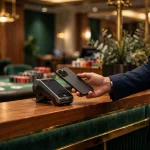
A cashless option can sound like a simple feature to check, but the label alone does not tell you how a venue handles play. It might refer to a machine or a payment arrangement, and those are not interchangeable. Without a clear statement from the venue, you cannot assume that its pokies accept cashless payments, or that every machine there works the same way.
If a venue advertises cashless pokies, look for an explanation of what the term means in that specific setting. Check whether the information comes from the venue itself and whether it applies to the machines you intend to use. Do not treat a payment method mentioned elsewhere as proof that a Tasmanian venue offers it. Nor does a cashless feature establish anything about a pokie’s returns or the venue’s suitability for you.
The same care applies when a result connects Newcastle with Tasmania. A place name on its own is not enough to identify a relevant Tasmanian venue; it may refer to another location or be used imprecisely. Before relying on a listing, confirm the full address and the state or territory shown on the venue’s own information. If those details are absent or unclear, do not assume the result describes a place in Tasmania.
It is reasonable to ask a venue directly whether it has cashless machines and what the arrangement involves. Ask for details that matter to your visit, rather than relying on a headline or a short listing. If the answer is not clear, treat the feature as unconfirmed.
These checks will not establish which pokies are best, but they can prevent a payment feature or place name from being mistaken for a confirmed local offering. Keep the distinction clear: a claim about cashless play, a venue’s location and the games available are separate details, each needing its own confirmation.
Each spin is determined by a random number generator, and spins are independent events. A previous win or loss does not make a particular result more likely next.
You must be at least 18 years old to gamble online in Australia.
It is the amount you must bet before bonus winnings can be withdrawn, calculated using a turnover multiplier. For example, a $500 bonus with a 40x requirement means you must place $20,000 in bets.