
A clear distinction between carrier billing and bank-based PayID helps explain what a deposit flow actually confirms.
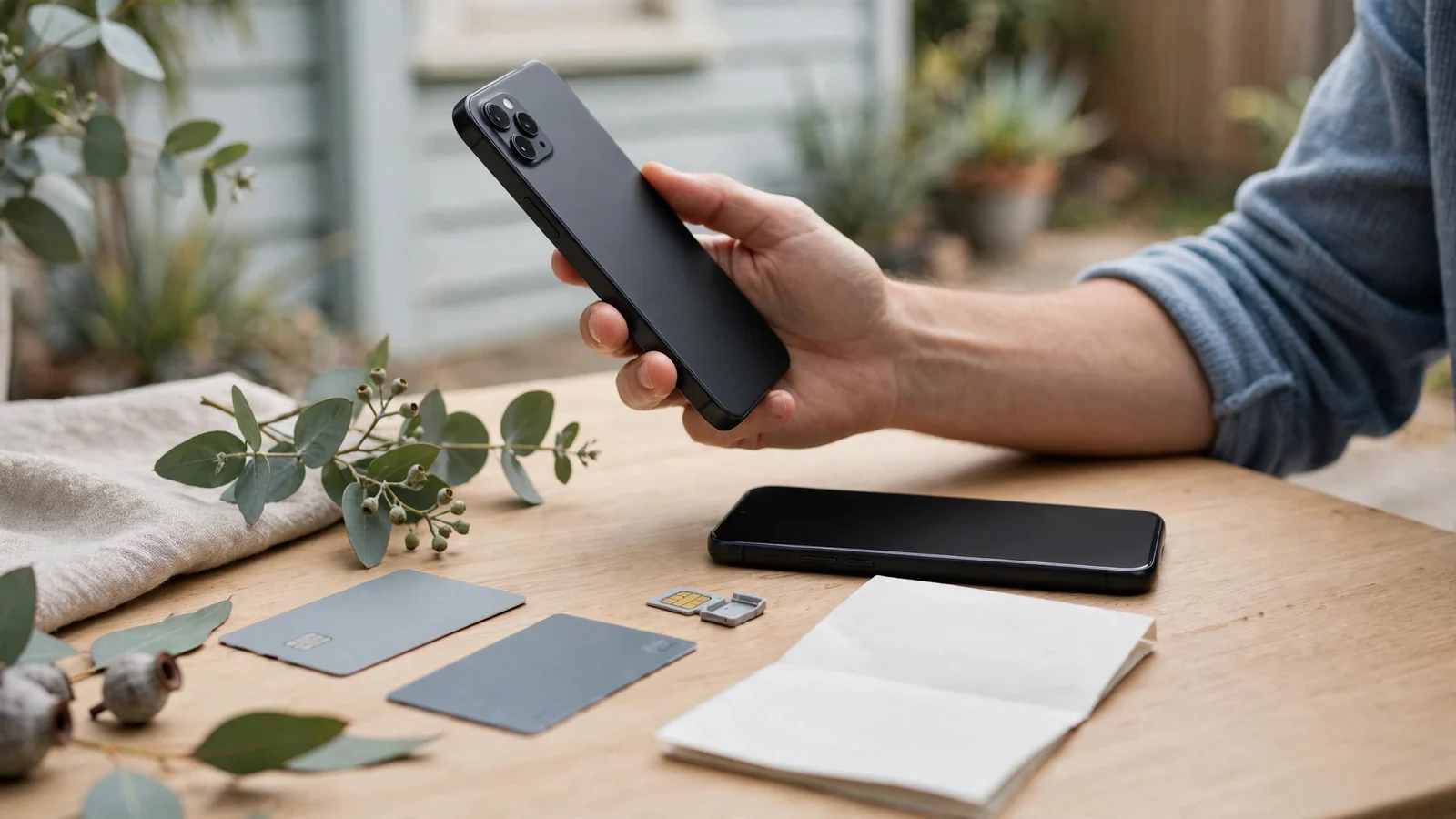
A payment described as “pay by phone” can mean that a charge is added to a mobile account. PayID is different: it is a bank payment service, not carrier billing. The fact that PayID can use a mobile number as an identifier does not mean the payment is charged to your phone bill.
That distinction matters when you are trying to understand what a payment option actually does. With phone-bill billing, the mobile provider is involved in collecting the charge through the customer’s account. With PayID, a mobile number may identify where a bank payment is sent, but the payment is confirmed through a banking app. The number is an identifier; it is not the source of the money.
PayID operates through the New Payments Platform (NPP). Its identifiers can include a mobile number or an email address, allowing users to send and receive payments without entering ordinary bank account details for every transfer. The use of a mobile number can make the terminology confusing, but it does not turn PayID into a mobile-billing service.
If you want to pay by phone at an Australian casino in 2026, check the available deposit methods directly before signing up. Use these details as a starting point, not confirmation that phone payments are supported.
JustCasino
JustCasino is listed with a Curaçao Gaming Control Board licence. No phone-payment details are provided here.
SpinsUp
SpinsUp is listed with Curaçao Gaming Control Board licence OGL/2023/174/0082, under Dama N.V. No phone-payment details are provided here.
Vegaz Casino
Vegaz Casino is listed with Curaçao licence OGL/2024/1335/0780 and a minimum deposit of EUR 20. Phone-payment availability is not specified.
Wild Tokyo
Wild Tokyo lists a minimum deposit of A$10 and payout estimates of 30–60 minutes for crypto and 1–5 days for fiat. These details do not establish whether you can deposit by phone.
Rollero Casino
Rollero Casino is listed with Curaçao Gaming Control Board licence OGL/2023/176/0095, under Hollycorn N.V. No phone-payment details are provided here.
Uptown Pokies
Uptown Pokies is listed as operating since 2017 under a Curaçao licence, with a minimum deposit of A$20. Phone-payment availability is not specified.
House of Pokies
House of Pokies lists an international iGaming licence, though its jurisdiction is not named. It gives a PayID payout estimate of 1–24 hours and a minimum deposit of A$30, or A$10 via PayID.
SkyCrown
SkyCrown is listed with a Tobique Gaming Commission licence and a minimum deposit of A$30. Its stated payout estimates are around 10–15 minutes for crypto and 1–5 days for fiat.
GoldenCrown
GoldenCrown is listed with Curaçao Gaming Control Board licence OGL/2023/176/0095, under Hollycorn N.V. No phone-payment details are provided here.
JeetCity Casino
JeetCity Casino is listed with a Curaçao eGaming licence under Dama N.V. No phone-payment details are provided here.
In a PayID deposit flow, a player selects PayID, enters an amount and confirms the payment in their banking app. That is a bank-initiated payment process. It is not a purchase made through a mobile app store, nor a charge placed on a monthly phone account.
So, if you are looking for mobile games that can be paid for by adding the cost to your phone bill, PayID does not answer that question. It describes another kind of payment route. Calling it “pay by phone” because a phone number can be used as the identifier would blur two separate systems and could leave you expecting a carrier charge that is not what the process describes.
The same distinction applies when the phrase “pay by phone bill” is used for an online casino or pokies. A site’s use of the word “mobile” may refer to playing on a handset, while a payment label may refer to a bank transfer initiated in an app. The device used to access a service does not establish how the payment is funded. Nor does the presence of a phone number as a PayID establish that a mobile provider will collect the money.
For any payment description, read the actual steps rather than relying on a short label. If those steps direct you to your banking app and ask you to approve a PayID payment, that is a bank payment. It should not be treated as a phone-bill charge or as proof that mobile carrier billing is available.
There is also an important Australian legal context. The Interactive Gambling Act 2001 makes it illegal for operators to provide real-money online casino games, including pokies, to people physically located in Australia. A payment method does not change that position. PayID should not be read as a route that makes real-money online casino play lawful, or as confirmation that a casino service is available to Australian residents.
If a payment page presents PayID beside wording about paying by mobile, pause and check what you are being asked to authorise. The relevant difference is not whether you are holding a phone: both a banking app and a phone-bill account may be accessed on one. It is whether the payment is approved through your bank or collected by a mobile provider. Those are different payment arrangements, with different parties handling the charge.
This also helps avoid a common misunderstanding in descriptions of mobile casino games. Playing on a mobile device, paying through a banking app and having a purchase added to a phone bill are three distinct ideas. Only the first two are relevant to the PayID process described above, and the payment itself remains bank-initiated. A mobile number can serve as the PayID identifier without the mobile carrier billing you.
The practical point is simple: do not assume that “phone” in a payment description means the same thing every time. PayID uses a bank-linked payment flow, even when the identifier is a mobile number. Phone-bill billing means something else. In Australia, neither label changes the legal status of real-money online casino services.
Legal Restriction
The Interactive Gambling Act 2001 makes it illegal for operators to provide real-money online casino games, including pokies, to people physically located in Australia.
A PayID payment is started in your banking app, not by entering a charge on a phone bill. Before you confirm any transfer described as a casino deposit, pause to check the recipient details, the amount and the payment reference. A transfer can reach its destination quickly yet still fail to appear against an account if the information needed to match it is missing.
There is an important legal limit in Australia: the Interactive Gambling Act 2001 prohibits operators from providing real-money online casino games, including pokies, to people physically located in the country. Payment instructions do not change that position. Treat claims that an Australian-facing service accepts casino deposits with care, and do not take a payment screen as proof that the service is lawful or suitable.
If you are reviewing how PayID transfers work, the general sequence is straightforward: a payer selects PayID, enters an amount, and confirms the payment in a banking app. The exact screens and prompts depend on the bank. Do not rely on a name or identifier copied from an unrelated message, an old transaction or a third-party page.
Before any confirmation, check that the recipient name displayed by the bank matches the details supplied for the payment. If it does not match, stop rather than guessing which field to trust. A transfer sent to the wrong recipient may be difficult to resolve, and a fast payment does not provide an opportunity to correct the details after it has been released.
Also check the amount shown in the banking app against the amount you intended to send. PayID transaction limits are set by each bank and vary between banks, so the app may also indicate whether a transfer is within your account’s permitted limit. Do not split or alter a payment merely to get around a limit or a warning.
The payment reference is not just a note for your own records. A casino payment system may use the player ID or username entered there to match the transfer with an account. If that identifier is absent or incorrect, the money may arrive without being automatically credited, leaving the payment pending until support staff can investigate it.
Use the exact player ID or username requested for the payment, and check it character by character before confirming. Do not substitute your real name, email address or a general description unless that is specifically what the payment instructions require. A reference that looks clear to you may not be the one the recipient’s system uses to identify your account.
If you have already sent a transfer and it has not appeared, keep the bank confirmation and note the reference used. Contact the payment recipient through a channel you can independently verify, and give the details requested for tracing the payment. Do not send a second transfer simply because the first one has not appeared on screen; that could leave you with two payments to resolve.
A PayID transfer can reach a casino within seconds, with a stated arrival range of 3 to 15 seconds. That describes the transfer reaching its destination; it does not guarantee that an account balance will update at the same moment. A missing or mismatched reference can still require manual support processing.
Deposit minimums are not universal. PayID deposits commonly start at AUD 10–20, while some services accept as little as AUD 5 through bank transfer. These figures are not a promise about any particular service or an invitation to make a payment. Check the amount and conditions shown by the bank and recipient before taking any action.
The safest point to stop is before the final confirmation if the recipient name, reference or requested amount is unclear. A payment that leaves your bank account is not automatically proof that the recipient is operating lawfully, that your account will be credited, or that the transfer can be reversed.
PayID is a payment service built into Australia’s banking system. It lets people send or receive money using an identifier, such as a mobile number or email address, instead of entering bank account details for each transfer. The New Payments Platform (NPP) provides the infrastructure that allows PayID payments to settle in real time.
That describes the payment rail, not the service receiving the money. When a PayID transfer is released, the banking network can move it quickly; it does not decide whether a casino account is eligible to receive funds, whether a payment is credited to an account, or when a withdrawal request is approved. Those are separate matters handled by the recipient and its own processes.
This distinction matters when payment descriptions promise that a casino payment is “instant”. A transfer may clear through the NPP within minutes once released, but that does not mean every step at the receiving end is instantaneous. The bank network’s role is to transfer funds. Any account review, matching or approval by a recipient happens outside that network and can affect the time before a balance changes or a payout is sent.
PayID’s real-time design also does not make it a special casino system. It is a general payment method available through participating banking services. The identifier helps direct a payment, while the NPP carries it between financial institutions. Neither feature verifies a gambling operator or establishes that a particular service is lawful or available to you.
There is an important Australian legal boundary here. Under the Interactive Gambling Act 2001, providing real-money online casino games, including pokies, to people physically located in Australia is illegal for operators. The prohibition covers online casino-style games such as poker and table games as well. A payment network’s ability to settle a transfer does not alter that rule, and a bank payment feature should not be read as approval of the activity or of any recipient.
PayID is a general banking infrastructure provided by the New Payments Platform (NPP) and does not verify the legality or status of any gambling operator.
So, if you encounter claims about pay-by-phone casinos in Australia, separate the payment terminology from what the network actually does. PayID uses a bank-linked identifier and the NPP; the term does not establish that a charge is added to a mobile bill, nor does it confirm that an online casino service is legally provided in Australia. The network can explain how a transfer moves, but it cannot substantiate claims about a casino’s status, its account handling or its payout performance.
For a reader trying to understand a payment claim, the useful question is not simply whether it says “real time”. Ask which part is described: the movement of money between banks, the receiving service’s internal handling, or a later payout. These stages should not be bundled together as one guaranteed result. A fast payment rail does not remove processing steps at the recipient, and a recipient’s stated processing time is not a measure of NPP settlement.
PayID is therefore best understood as Australian banking infrastructure, not as evidence that a “pay by phone casino” option exists or is authorised for local use. Its real-time settlement function is factual; any broader claim about casino access or service needs separate scrutiny.
A “pay by phone” label can mean different things. It may describe a charge added to a mobile account, or it may be used loosely for a payment started on a phone. Those are not the same arrangement. Before treating a claim as meaningful, identify what the payment actually does: whether the charge goes through your carrier, a bank account, or another payment service.
A claim that a site accepts phone billing should be specific about the carrier, the payment route, and any limits or charges. A page that only places “pay by phone” beside pokies or a casino deposit offer does not establish that your mobile provider will process a payment. Nor does the presence of a familiar game title prove that a particular payment method is available.
For Australians, the legal setting matters before comparing payment features. The Interactive Gambling Act 2001 prohibits operators from providing real-money online casino games, including pokies, to people physically located in Australia. A payment claim does not change that position. Be cautious about pages that present offshore casino access as an ordinary local service, or that use confident language about availability without explaining what the payment route is.
PayID is a separate bank-based route, not a charge added to your phone bill. Its transaction limits are set by the bank and differ between institutions. Most major Australian banks allow PayID transactions of AUD 1,000 to AUD 5,000 per transaction, with daily limits from AUD 10,000 to AUD 20,000. Those are bank limits, not evidence that a casino accepts carrier billing, and they should not be read as a promise about any particular service.
When assessing a payment claim, look for clear distinctions between the payment method and the device used to access it. Paying through a banking app on a mobile phone is still a bank payment. A mobile number used as a PayID identifier does not make the transfer phone-bill billing. The wording should tell you which account is charged and who processes the transaction.
Be wary of broad claims such as “best pay-by-phone casino” when they do not identify the actual billing arrangement or explain its terms. A ranking label is not proof of a working carrier-billing option, and a bonus mentioned beside it does not confirm that the offer or payment route applies to you. Avoid entering payment details or relying on a promotion until the route and conditions are clear.
The same care applies to claims tied to particular slots or software brands. A game name and a payment badge are separate claims; one does not substantiate the other. Treat each as something that would need clear, current information behind it, rather than assuming that a site supports phone billing because the page combines those terms.
If a payment description is unclear, do not infer that your carrier will be billed or that the service is lawful for use in Australia. Keep the distinction between carrier billing and bank payments explicit, and do not let a “best” label substitute for understanding what the transaction would actually do.
A bonus label is not a substitute for its conditions. Whether an offer is described as no-wagering, no-deposit or a credit-style promotion, read the full terms before accepting it. The label alone does not tell you what you must do before winnings can be withdrawn, or whether the offer is available to you.
Start with the wagering requirements. Check which parts of the bonus, and any associated balance, must be played through before a withdrawal is allowed. If the wording is unclear about what counts or when the requirement is complete, do not assume the most favourable interpretation. A “no wagering” description should be checked against the detailed terms, not treated as proof that no conditions apply.
Next, look for the maximum bet while a bonus is active. A stake above the stated limit may affect eligibility to withdraw, so make sure you understand which bets the rule covers and when it applies. If you cannot find a clear limit, seek clarification before opting in rather than relying on an assumption.
Game weighting matters too. Terms may assign different contributions to different games, meaning that playing one game may count differently towards a requirement than playing another. Check which games qualify and how they are treated. Do not assume that every game contributes equally, or that a game you prefer will help meet the terms.
Read the time limits carefully. Establish when the permitted period begins, what needs to be completed within it, and what happens if it expires. The important point is not just the headline duration, but how the terms define the start and end of the period and any effect on bonus funds or related winnings.
Finally, check the maximum cash-out conditions. A promotion may limit the amount that can be withdrawn from bonus-related play. Make sure you can identify what the limit applies to and whether it affects the balance you expect to keep. A generous-sounding offer can be of little practical value if its withdrawal conditions do not suit you.
These checks are separate from the payment method. A phone-related payment description does not establish that a bonus exists, remove its conditions or make a withdrawal possible. Nor should a search for a no-deposit offer be taken as confirmation that one is available.
There is also an important Australian context: operators are prohibited from providing real-money online casino games to people located in Australia. Do not treat bonus wording as evidence that an online casino offer is lawful or available locally. If terms are incomplete, contradictory or difficult to understand, the safer decision is not to accept the promotion.
A payment label cannot tell you whether a service is connected to BetStop. A claim that a pay-by-phone casino is “not on BetStop” is not evidence that it is outside the self-exclusion system, and choosing a particular way to pay does not change your BetStop status.
The same caution applies to claims that a casino avoids a particular billing provider. A page might describe phone-bill charges without naming the company that processes them, or say that a service is “not Boku.” Neither wording verifies how a payment is handled. If the provider matters to you, look for clear, current terms that identify the billing arrangement; do not treat an absence of a provider’s name as proof that it is not involved.
Labels such as “real-money” or “no deposit” do not resolve these questions either. They describe, or appear to describe, a payment or offer arrangement; they do not establish a service’s relationship with BetStop or confirm that the arrangement is available to you. Nor does a reference to bingo and pokies prove that a particular site offers those games or handles payments in a particular way.
There is a separate legal issue. Australian law prohibits operators from supplying real-money online casino games—including pokies and table games—to people located in Australia. That restriction concerns the service being offered, not whether a deposit is billed through a phone account, a bank-linked payment method or another route. A payment claim should not be read as evidence that the underlying casino service is lawful or accessible in Australia.
If you have self-excluded, do not rely on a payment method or a “not on BetStop” claim as a way around that decision. For accurate information about your own BetStop status, use the official BetStop service. If gambling is causing harm or you need support, Gambling Help Online is an Australian support service. The key point is simple: billing language cannot verify BetStop status, identify every payment provider or make an otherwise prohibited online casino service permissible.
A payment label does not tell you which games a service offers. A page describing PayID says something about a way to move money; it does not verify that particular pokies, casino sites or bonuses are available, or that a phone-bill charge can be used to play them. Treat those as separate claims, not as details you can infer from a payment logo.
Attention: A payment label or logo does not verify which games a service offers or that a specific bonus is available to you.
There is also an important Australian legal boundary. The Interactive Gambling Act 2001 prohibits operators from providing real-money online casino games, including slots, to people physically in Australia. So a description of payment mechanics should not be read as an invitation or assurance that an online casino service is lawful or available to you.
PayID information can still clarify what happens to a payment. A deposit is initiated through a banking app, while a withdrawal is a separate transaction requested from an account. A specialist affiliate review gives a particular range for PayID casino withdrawals, but that is one review’s report, not an established market standard: it cites starting amounts of AUD 20–50 and per-transaction maximums of AUD 5,000–10,000. Those figures cannot confirm a payout limit at any specific service.
The withdrawal route may also depend on the operator’s rules. Some operators may ask you to withdraw through the same method used for a deposit when that is possible. That condition does not mean every PayID deposit can be returned by PayID, nor does it identify a service that offers particular games.
Keep the distinction in mind if a page links pokies, a casino bonus and PayID in one claim. The payment detail alone does not establish the games or promotion, and a bonus label does not establish that the offer is available to Australian residents. Before making any decision, check what the payment statement actually covers and do not treat it as proof of a casino’s status or product range.
A payment option described for an overseas market does not establish that it can be used by someone in Australia. References to Curaçao or Germany, for instance, may appear beside claims about casino games funded through a mobile phone bill. Those descriptions concern the services and rules in those places; they do not show that the same arrangement is available to Australians.
The distinction matters when a page presents a list of leading phone-billing casinos or says that mobile billing works for online pokies. A search result, promotional description or overseas payment guide is not evidence that an Australian player can use the service. Nor does a payment label tell you whether the operator may offer real-money casino games to people in Australia. The Interactive Gambling Act 2001 prohibits operators from providing online casino games, including pokies, to people physically located here.
Withdrawal times offer a useful contrast, but they should not be read as proof of local availability. A specialist review describes approved PayID and some e-wallet or cryptocurrency withdrawals as arriving within minutes to hours, while bank transfers and card withdrawals can take one to five business days. Treat those timings as that review’s account, not a promise or a rule for every service. Approval is a separate step: an operator’s internal checks can hold a withdrawal before the payment network is involved.
A specialist review cites PayID casino withdrawals starting from AUD 20–50 with per-transaction maximums of AUD 5,000–10,000, often arriving within minutes to hours.
For you, the practical point is to keep location and payment route separate. A claim that a phone-bill method is used abroad does not confirm an Australian option, and a description of PayID withdrawal timing does not validate a casino service here. International labels, language settings or a foreign jurisdiction named on a page do not change where you are located or the rules that apply to operators serving people in Australia.
If you encounter a phone-billing offer framed for another country, do not treat its payment instructions or payout claims as locally applicable. The only grounded comparison here is about how different withdrawal routes may be described after approval; it does not establish that overseas casinos or their phone-billing services are available to Australian residents.
Credit and phone-bill payments can appear together in descriptions of overseas gambling services, but they are different payment arrangements. A credit card draws on a credit facility; carrier billing puts a charge on a mobile account or prepaid balance. Neither description applies to PayID.
PayID is linked to a bank account. It lets a user send or receive money using an identifier, such as a mobile number or email address, through the New Payments Platform. The identifier may look like a phone detail, but that does not mean the payment is charged to a mobile bill. Any transaction limits are set by the user’s bank and can differ between banks.
This distinction matters when a service is described as accepting payment by phone credit. That wording may refer to a carrier-billing arrangement, not a bank payment, and it should not be treated as evidence that PayID or credit-card funding is involved. The payment label alone cannot establish how a transaction is handled or whether a service is lawful for use in Australia.
Credit cards are not an available route for funding online casino gambling services in Australia. The Interactive Gambling Act 2001 prohibits operators from providing real-money online casino games, including pokies, to people physically located in the country. Choosing a different payment method does not change that rule. A payment option should not be read as permission to use a service.
If you see a phone-billing or credit claim, avoid assuming that it describes a local, lawful offering or that it works like a bank transfer. Keep the categories separate: carrier billing is a charge through a mobile provider, credit is borrowing through a card account, and PayID is a bank-linked payment identifier. The name of a payment route does not make these methods interchangeable.
A free-spins headline or a credit-style offer can sound straightforward, but the label alone does not tell you what you would receive or how it could be used. A search for these promotions does not establish that they are available to people in Australia, or that a phone-billing payment option is connected to them.
Before acting on any offer, read its full terms. Check whether winnings from free spins must meet wagering requirements, which games count towards those requirements, and whether a maximum bet applies while they are in effect. Look for time limits and any cap on the amount you can withdraw. These conditions can change what an offer is worth in practice, even when the headline makes it sound generous.
Treat “credit” with care, too. The word may describe a promotional balance rather than money you can withdraw, and the label does not explain the conditions attached to it. Confirm what the offer covers, what you must do before winnings can be withdrawn, and whether accepting it changes other terms on an account. If the details are unclear, do not rely on the headline.
These checks do not make an offer available or lawful. Australian law prohibits operators from providing real-money online casino games to people in Australia. A promotion label is not evidence that a service can lawfully be offered here.
PayID casino deposits commonly start at AUD 10–20. Your bank sets PayID transaction limits; most major Australian banks allow AUD 1,000–5,000 per transaction, with daily limits of AUD 10,000–20,000.
For verified accounts, top-rated PayID casinos typically review and approve withdrawals within 2–6 hours. Once approved, a PayID payout may arrive within minutes to hours, while bank transfers and card withdrawals often take one to five business days.
Most major Australian banks allow PayID transactions. Your bank sets the transaction limits, which you can check in your banking app.
Yes, PayID withdrawals are possible at casinos that support them. You may need to complete identity checks before your first withdrawal, and the casino’s review process can affect how quickly you receive the funds.
Some casinos support PayID withdrawals, but PayID availability does not make real-money online casino services lawful for people physically located in Australia.
PayID casino deposits commonly start at AUD 10–20.