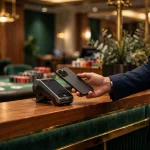
Osko availability does not confirm that an offshore casino may legally serve Australians or that deposits and withdrawals follow the same terms.

If you are considering an offshore casino service from Australia, the legal position matters before any payment question. The Interactive Gambling Act 2001 makes it unlawful for operators to provide real-money online casino games to people physically located in Australia. This covers casino-style services offered to Australian residents, even when an operator is based overseas.
The restriction is directed at the operator, not framed as an explicit criminal offence for an individual who uses an offshore site. That distinction may be reassuring, but it does not make the service lawful for the business to provide in Australia, or make using it equivalent to dealing with a locally protected provider. The Australian Communications and Media Authority (ACMA) oversees enforcement of the Act.
A payment method does not change that legal position. A service describing itself as accepting a familiar bank-linked payment option, or appearing accessible online, is not thereby authorised to offer real-money casino games to people in Australia. Payment availability and the legality of the underlying service are separate matters.
If you’re looking for casino sites that accept Osko in Australia in 2026, use this list as a starting point and check each site’s current payment options before depositing. The available details don’t confirm Osko acceptance for these operators.
JustCasino
JustCasino is listed with a Curacao Gaming Control Board licence. No further operator details are available here.
SpinsUp
SpinsUp is listed under Curacao Gaming Control Board licence OGL/2023/174/0082, held by Dama N.V. The available details do not specify its payment methods.
Vegaz Casino
Vegaz Casino is listed under Curacao licence OGL/2024/1335/0780, with a minimum deposit of EUR 20.
Wild Tokyo
Wild Tokyo lists a minimum deposit of A$10 and payout speeds of 30–60 minutes for crypto and 1–5 days for fiat. It is listed as licensed in Curacao.
Rollero Casino
Rollero Casino is listed under Curacao Gaming Control Board licence OGL/2023/176/0095, held by Hollycorn N.V. No payment-method details are provided.
Uptown Pokies
Uptown Pokies is listed as operating since 2017 under a Curacao licence, with a minimum deposit of A$20.
House of Pokies
House of Pokies lists PayID payouts in 1–24 hours and a minimum deposit of A$30, or A$10 for PayID. Its source describes an international iGaming licence but does not name the jurisdiction.
SkyCrown
SkyCrown is listed with a Tobique Gaming Commission licence and a minimum deposit of A$30. Its listed payout speeds are around 10–15 minutes for crypto and 1–5 days for fiat.
GoldenCrown
GoldenCrown is listed under Curacao Gaming Control Board licence OGL/2023/176/0095, held by Hollycorn N.V. The available details do not specify its payment methods.
JeetCity Casino
JeetCity Casino is listed as licensed by Curacao eGaming, with Dama N.V. named in the licensing details. No further operator details are available here.
There is also an important consumer-protection limit. Australian consumer law does not protect players who use offshore casinos. If a dispute arises over an account, funds or a service, you cannot assume that the protections and remedies available in a domestic consumer transaction will apply. An offshore business may operate under another country’s rules, and an Australian player may have limited practical options for resolving a disagreement. Do not treat an attractive payment claim as a substitute for those protections.
This is relevant when you are weighing up casino sites said to accept Osko in Australia. The wording of a payment offer cannot establish that an operator is permitted to provide casino services here, nor can it create Australian consumer-law protection. A transfer completing successfully would only show that the payment went through; it would not settle the legal status of the casino service or guarantee help if something later goes wrong.
Keep the distinction clear: the law places the prohibition on operators offering these services to people in Australia, while it does not explicitly criminalise players for using offshore sites. That does not amount to an endorsement or a statement that the arrangement is safe. It means the legal risk and the consumer-protection position are not the same for the operator and the player.
Before relying on any claim about offshore gambling, consider what it actually tells you. A payment label is not evidence of local authorisation, and an accessible website is not evidence that Australian consumer protections apply. For residents, the central point is that real-money online casino services are prohibited from being provided to people in Australia, while the player is not explicitly criminalised under the Act for using an offshore service. Keep that distinction in view rather than reading payment access as a sign of legal security.
A phrase linking Osko with Australian pokies can sound like a straightforward request for a list. It is not, by itself, evidence that any particular casino accepts the payment service, or even that the phrase is being used consistently. Search wording tells you what someone hopes to find; it does not confirm that a service exists or that a payment option is available to Australian users.
The word “Australian” can also mean different things in this context. It might describe the person searching, the currency or location a website mentions, or an operator’s intended audience. Those meanings are not interchangeable. A site that uses Australian language or displays Australian dollars has not thereby established that it is legally permitted to provide casino games to people in Australia. Nor does an Australian-facing description verify a connection with Osko.
The same distinction applies to “pokies”. It is a familiar Australian term for a kind of casino game, but its presence in a website description or search result does not establish that the service is lawful, available to you, or connected to a particular payment method. A phrase can bring together terms that appear relevant while leaving the important question unanswered: what does the service actually provide, and to whom?
Legal Risk
Under the Interactive Gambling Act 2001, it is unlawful for operators to provide real-money online casino games to people physically located in Australia.
For people physically in Australia, the legal setting matters when interpreting any claim about online casino games. Under the Interactive Gambling Act 2001, operators are barred from offering those games to people in Australia. The law does not explicitly make an individual player’s use of an offshore site a criminal offence. That distinction is not a confirmation that an offshore service is lawful for the operator, protected for you, or available in practice. It is a reason to avoid treating search wording as a reliable guide to either legality or access.
A result that describes itself as an Australian online casino accepting Osko may therefore be making several separate claims at once. It may imply an Australian connection, the availability of casino games, and acceptance of a named payment service. None of those implications proves the others. In particular, a reference to Osko in a headline, page description or discussion is not the same as a confirmed statement about what an operator accepts. Even a page that appears to answer the phrase directly may be describing an old arrangement, repeating another page, or using the terms loosely.
This is why a “best” or “new” label should not be read as confirmation either. Those words express a judgement or a claim about recency; they do not demonstrate that a service accepts Osko. A list can look decisive while offering no basis for the central assertion. The number of results, their confident wording, or the fact that several pages repeat the same claim cannot independently verify it.
There is also a difference between a payment service being familiar in Australia and a casino accepting it. People may encounter a payment name in ordinary banking or shopping contexts, but that familiarity does not establish its use in online gambling. A search phrase can suggest the connection, but the suggestion should not be mistaken for evidence.
If you are trying to understand what a result actually establishes, separate its wording into individual claims. Does it identify a specific operator? Does it make a direct, current statement about Osko acceptance, rather than merely mentioning the name? Does it make clear who can access the service? These are questions about the meaning and scope of the claim, not a recommendation to use the service. A page that leaves them unclear has not resolved the uncertainty created by the phrase.
The key point is modest but important: searching for Australian pokies linked with Osko cannot, on its own, verify that an online casino accepts Osko. It also cannot establish that a casino is legally entitled to serve people in Australia. Treat the wording as a description of what you are looking for, not as proof that the matching service or payment arrangement exists.
Before sending money, treat a payment label as a claim to verify, not proof that a transaction will be available to you. A page may name a method without making clear whether it applies to Australian customers, whether it is currently offered in the cashier, or what conditions attach to it. If you cannot confirm those points from the operator’s own current terms, do not rely on the label when deciding whether to proceed.
This matters for a proposed Osko deposit as much as for any other payment method. The word “Osko” on a promotional page does not, by itself, confirm that an Osko option appears in the cashier or that a payment would be accepted. Do not infer acceptance from a bank transfer option, a familiar logo, or another customer’s account of a transaction. Conditions can differ between services and may change, so the relevant information is the one that applies to the specific account and payment you are considering.
A second check is whether the account has completed the operator’s Know Your Customer assessment. Online casinos typically require customers to complete this assessment before financial transactions. That means the cashier’s display of a method should not be taken as confirmation that you can immediately use it. An account may still need to pass the operator’s checks before a payment can be processed. Check what the operator says about the assessment and whether it is complete before entering payment details or submitting a transaction.
Do not assume that an account-registration step and a payment check are interchangeable. The stated requirement concerns financial transactions, so a payment option being visible does not establish that the assessment has been completed. If the operator’s information is unclear, pause rather than sending funds and hoping the account will be cleared afterwards. A transaction can create a separate problem if account checks remain outstanding.
Read the cashier and payment terms together. The cashier can show which methods are presented for an account, while the terms may explain who can use them and what conditions apply. Check that the method is identified specifically, rather than relying on a broad description such as “bank payment”. If the available information does not clearly connect the named method to the transaction you intend to make, treat that uncertainty as unresolved.
Look for the conditions that apply to the amount you plan to send, without assuming that a method has a universal minimum or maximum. A specialist review of Amex payments reports that individual casinos set their own deposit and withdrawal limits and that these can vary. That is a reminder that payment limits are not necessarily fixed across operators; it does not establish any Osko limit. Use only a limit stated in the relevant operator terms or shown for your account, and do not transfer an amount based on a figure published elsewhere.
Also check whether the payment information is current and specific to your circumstances. A general page may not reflect what appears in the cashier, and a method shown to one customer may not be available to another. If the operator’s wording conflicts across pages, or leaves an important condition unexplained, avoid treating the more favourable interpretation as confirmed. A clear, specific answer is more useful than a confident label.
Keep the focus on the transaction, not on the apparent ease of the process. A payment option being listed does not establish that the operator will accept a particular transaction, nor that its account checks are complete. Do not enter payment details until you have understood the stated requirements and can verify that the method and conditions apply to you. If that information is not available or is inconsistent, the safer choice is to stop before funds are sent.
A payment that appears quickly in an account does not tell you how quickly money will return to you. Depositing and withdrawing are separate processes, and an instant deposit is not evidence of an instant withdrawal. The distinction matters whenever a payment method is described as “instant”: the word may refer only to money entering an account, not to a withdrawal reaching a bank or card.
Amex illustrates the difference. Casino deposits made with Amex are processed instantly, while a specialist review reports that an Amex casino withdrawal can take up to five days to clear. That reported timeframe is not a general guarantee for every operator or transaction. It is a reminder that the outward payment can have a different timeline from the inward one.
The word “clear” also needs care. A casino may mark a withdrawal as requested or processed before the money is visible in the account receiving it. Those are different points in the transaction. A displayed status does not, by itself, tell you when funds will be accessible. If a payment description does not define what its timing refers to, treat “instant” as an incomplete claim rather than a promise about the full journey.
This is particularly important when you are looking for an instant Osko withdrawal from a casino. The timing described for Amex cannot be transferred to Osko: different payment methods do not share a processing clock simply because both are used to move money. Nor does an instant deposit through one method establish that withdrawals through another method are available or fast. No Osko timeframe should be inferred from the Amex comparison.
The phrase “instant withdrawal” can conceal several separate steps. A request may need to be reviewed before it is sent; the receiving payment service may then take its own time to show the funds. These stages are not interchangeable. A statement about one stage should not be read as confirmation that the whole withdrawal is instant. If the wording does not say whether it describes approval, dispatch or receipt, you cannot reliably compare it with a timeframe that refers to a different stage.
So, when a payment claim uses “instant”, identify what is supposedly instant. Does it mean that a deposit is credited, that a withdrawal request is approved, or that funds arrive at the destination? The label alone cannot answer that. This is not a technical distinction for its own sake: if you are relying on access to the money, the arrival time matters more than the time a request changes status.
Payment Timelines
Deposit speed and withdrawal speed are separate facts; an instant deposit does not guarantee an instant withdrawal.
A reported maximum of five days for Amex withdrawals should also be read narrowly. It describes a stated clearing period, not a universal timetable for every casino, every account or every circumstance. It does not mean a withdrawal will take that long, nor does it prove that another method will be quicker. The deposit’s instant processing does not cancel the separate withdrawal period.
For Osko, do not treat phrases such as “instant payout” as proof of a confirmed arrival time. The method name and a speed label do not establish how a particular transaction is handled. A precise claim would need to make clear which stage it measures and what conditions apply; without that clarity, “instant” is not enough to plan around. In particular, a claim about instant deposits cannot substantiate a claim about instant Osko withdrawals.
If funds are time-sensitive, avoid making plans based solely on a payment label or on an estimate reported for a different method. A delay between a withdrawal request and receipt can matter even when the deposit side of a transaction is described as immediate. The practical point is simple: deposit speed and withdrawal speed are separate facts. Amex provides a concrete contrast—instant deposits, with a specialist review reporting that withdrawals can take up to five days to clear—but it tells you nothing about an Osko withdrawal’s processing time.
A ranking needs comparable evidence, not just a set of names beside a payment label. To call one service the best Osko casino site, you would need current, consistent information showing that the same payment method is available on each service and that the comparison uses clear criteria. Without that, a “best” label is a recommendation, not a verified finding.
A payment claim is more useful when it is specific and can be checked against the operator’s own current terms or cashier. It should identify the method, explain whether it applies to deposits, withdrawals, or both, and state any conditions that affect access. A broad statement such as “supports bank payments” does not establish that Osko is accepted. Nor does a list of casino websites become reliable merely because it repeats the same claim.
The distinction matters when a page presents an Osko casino list or describes a site as the best choice in Australia. A list can be assembled from outdated reviews, copied descriptions or promotional material, none of which necessarily confirms present availability. Treat rankings as opinions unless their criteria and supporting evidence are clear. The same caution applies to claims about bonuses: a bonus label does not verify a payment method or show that a payment can be made under the advertised conditions.
Even comparisons about other payment methods can be time-sensitive. One specialist review has suggested that Visa may be accepted more broadly than American Express at Australian online casinos. That is a claim from one type of source, not a dependable rule for every operator or a basis for ranking services. It illustrates why a payment comparison should be tied to a clearly identified source and date rather than repeated as a general market fact.
When you encounter a “best” claim, look for what is actually being compared. Does the information distinguish deposits from withdrawals? Does it identify the payment method precisely, or group different bank-linked options together? Is the claim tied to current operator wording, or does it rely on an unspecific recommendation? If those points are not addressed, the ranking cannot tell you whether the stated method is available to you.
The wording “best Osko casino” can sound like a straightforward comparison, but the label alone cannot establish acceptance, suitability or value. A careful assessment separates evidence about a payment method from promotional language about a service. If a page cannot show the basis for its comparison, it is more accurate to treat its ranking as unconfirmed than to assume that its order reflects verified differences.
A payment method and a game catalogue answer different questions. A reference to Osko in payment information would not, by itself, show which games a service makes available. Nor would a game listing show that Osko can be used to fund an account or a particular activity.
That distinction matters when you see a claim connecting Osko with casino games. The wording may bring the two subjects together, but it does not establish that the payment option is supported, that a named game is offered, or that the payment method can be applied to it. Those are separate claims and need separate confirmation.
A specialist review has reported that deposits by American Express are available at some Australian online casinos. That limited statement concerns one payment method and deposits; it does not confirm Osko acceptance or identify any games. It should not be treated as evidence that a payment method and a particular game are linked.
The same caution applies to references to “Osko games” or games “with Osko.” Such phrasing can blur the difference between a payment option associated with an account and the content offered by a service. It does not establish that a game itself processes a payment, or that any transaction is made through Osko at the point of use.
Keep the two checks separate in your assessment: whether a game is listed is one matter; whether a payment method is available is another. A claim about one cannot fill in the missing detail about the other. If information mentions Osko but says nothing about the games, it tells you nothing about game availability. If it describes games without specifying the payment arrangement, it does not establish Osko support.
This is a narrow distinction, but an important one. A payment label is not a catalogue, and a catalogue is not proof of a payment option. Treating them as interchangeable can make a claim sound more specific than it is.
In Australia, tapping a contactless credit or debit card is a familiar way to pay in everyday settings. Mobile wallets, including Apple Pay and Google Pay, are also widely accepted. Many consumers move between cards, phone-based wallets and services connected to bank accounts, such as PayPal, depending on the payment they need to make.
That familiarity can make a payment label seem more informative than it is. A method being common in shops or across consumer services does not show that an online casino accepts it. The same applies to Osko: its place in Australians’ everyday banking habits would not, by itself, establish that a particular gambling service supports it. Nor does a general reference to bank-linked payments confirm that Osko is available as a distinct option.
For a person looking into an Australian casino that accepts Osko, the relevant distinction is between what people commonly use and what a service actually offers. Familiarity with contactless cards, mobile wallets or PayPal is background about the wider payment landscape; it is not evidence of acceptance by an online gambling operator. A payment method’s popularity cannot stand in for a specific, current statement about a service.
There is also an important legal context: the Interactive Gambling Act 2001 prohibits operators from providing real-money online casino games to people in Australia. Australian consumer law does not protect people who use offshore casinos. Everyday payment habits do not change either point, and they should not be taken as reassurance about using an offshore gambling service.
Keep the categories separate. Widespread use of cards and mobile wallets says something about ordinary Australian payments. It does not confirm that Osko—or any other particular method—is accepted by an online casino, and it does not make a prohibited service lawful.
A payment method shown for adding funds does not automatically mean it can be used to receive winnings. Deposit and withdrawal rules may be separate, and an operator may set different conditions for each. That distinction matters when you are checking whether a service claims to support an Osko withdrawal: a deposit option alone would not establish that payouts can return by the same route.
A specialist review has reported that some casinos may refuse withdrawals to American Express or apply an additional fee. Treat that as a report about particular terms, not a rule that applies across the market. The same type of review has noted that not all Australian online casinos allow withdrawals to American Express. Terms can differ between operators and can change, so a general payment label is not enough to tell you what will happen to a payout.
For any payment method, look for separate wording on deposits and withdrawals. Check whether the method is listed for both directions, whether the account holder must have used it to deposit first, and whether another payout route may be required. If the terms are unclear about Osko, do not infer withdrawal availability from the fact that Osko appears in a deposit description.
Fees also need attention. A fee attached to a withdrawal is distinct from the time it takes to process one, and a method accepted for deposits may carry different conditions when money is paid out. Before relying on a payment claim, read the withdrawal terms and retain a copy of what they say at the time. If the conditions do not clearly confirm the route and any applicable fee, you cannot safely assume the same method will be available for both deposit and withdrawal.
A payment logo or method name does not tell you the full cost of a transaction, or whether it will be approved. For Australian readers, that distinction matters when assessing claims about an Osko casino payment method: the label alone cannot establish the terms or confirm that a payment will go through.
Fees can depend on the operator and payment route. A specialist review has reported that a casino may add a 1.5% surcharge to Amex transfers. Treat that as a condition to verify in the relevant terms, not as a fee that applies everywhere. An operator’s cashier and payment rules are the places to look for any charge attached to a transaction.
Approval can also depend on the payment provider or card issuer. A specialist review has noted that Amex could refuse a payment to a particular website, while an Australian bank may block gambling-related transactions on an Amex card at issuer level. In either case, seeing Amex listed does not guarantee that a payment will be authorised. The same principle applies to other payment labels: acceptance depends on the conditions attached to that route, not just the name shown on a page.
Before relying on a payment claim, read the terms for fees and restrictions, and check whether the stated method is available for the transaction you have in mind. If a condition is unclear, do not assume that the advertised label resolves it. A payment might carry an extra cost or be stopped before completion.
These Amex examples do not establish whether a casino accepts Osko, what an Osko transaction would cost, or whether it would be approved. They are a reminder to assess specific terms rather than treating a payment name as a complete description. This discussion is not a recommendation to use an offshore casino or to make a gambling payment.
A payment label tells you about a payment claim, not the range of games connected with an account. Seeing Osko mentioned alongside an online casino does not establish which games are available, whether a particular title can be opened, or whether access is possible from your location. The same distinction applies if a site describes its payment option as suitable for pokies: that wording does not confirm a game catalogue.
Game access and payment acceptance are separate matters. A payment method might be described without any clear information about games; a game description, in turn, does not show that a particular payment method is accepted. Treating one as proof of the other can lead you to assume more than the label actually says.
There is also an important Australian legal boundary. Under the Interactive Gambling Act 2001, operators are prohibited from offering online casino games to people in Australia. A payment reference does not alter that rule or make the provision of those games lawful.
For you, the practical point is simple: do not read a payment label as confirmation of game availability or access. Nor should a mention of a game be taken as evidence that Osko can be used for it. These are distinct claims, and one cannot verify the other. A short label can describe an intended payment route, but it cannot establish what content is accessible or whether an operator may lawfully provide it to someone in Australia.
Check the casino’s cashier or payment-methods section for American Express before depositing. Availability varies by casino, and an Amex payment may also be blocked by your card issuer.
Jackpot City Casino, Spin Palace, Ruby Fortune, Ignition Casino, Joe Fortune and PlayAmo are listed as supporting Amex deposits for Australian players. Check the cashier to confirm it is currently available to you.
Yes, some online casinos accept Amex deposits, but not all do. A deposit may be declined if Amex or your Australian bank blocks payments to that website.
Amex deposits typically have no fee, but a casino may add a 1.5% surcharge, and currency conversion can incur a 3% fee. Some casinos may also charge withdrawal fees.
Amex casino deposits are processed instantly.
Deposits are typically free, though a casino may charge a 1.5% surcharge and currency conversion may cost 3%. Withdrawal fees may also apply.